The SNP: a history from 1934 to the 2026 Holyrood election
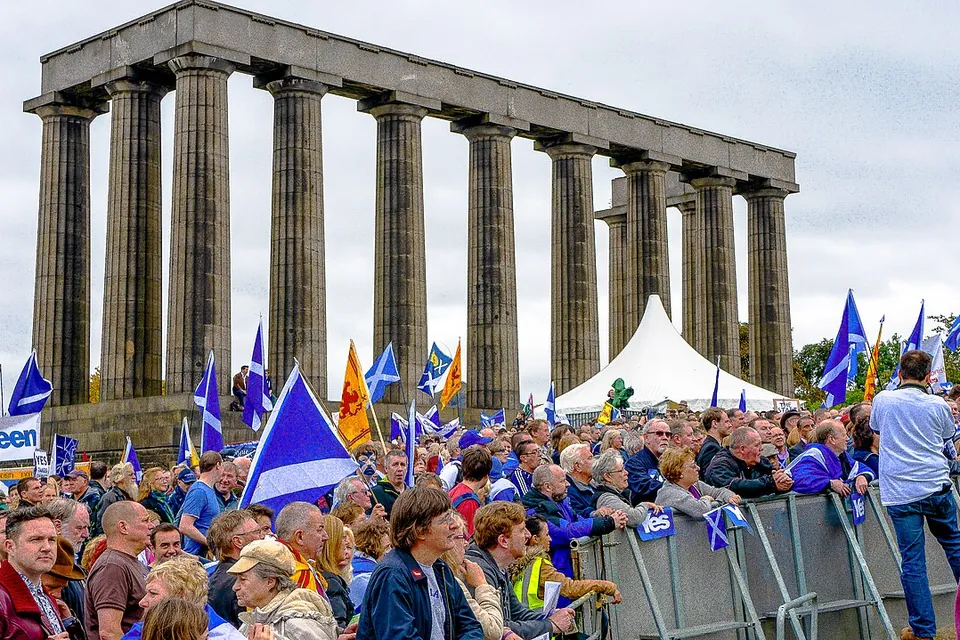
The Scottish National Party has governed Scotland since 2007, longer than any party has held power at Holyrood. For most of its history, though, it was a small party that won the occasional by-election and then lost the seat. This is the story of how it got from one to the other, told through the elections that changed it, with the arguments of its supporters and critics set side by side.
The SNP at a glance
- Founded: 7 April 1934, by the merger of the National Party of Scotland and the Scottish Party.
- First MP: Robert McIntyre, Motherwell, April 1945 (held for three months).
- In government: since May 2007, as a minority, a majority (2011–2016) and, from 2021 to 2024, with the Scottish Greens.
- Leader: John Swinney, since May 2024, re-elected First Minister after the May 2026 election.
- Members: about 51,000 at the end of 2025, on the party's accounts filed with the Electoral Commission, against a peak of around 125,000 in 2019.
Two small parties become one (1928–1945)
Scottish nationalism as an organised political force predates the SNP. The Scottish Home Rule Association had campaigned for a parliament in Edinburgh since the 1880s, and in 1928 activists frustrated by the failure of home rule bills formed the National Party of Scotland, which wanted self-government outside the Westminster parties. A more moderate, partly Conservative-leaning Scottish Party followed in 1932. The two merged in April 1934 to form the Scottish National Party, with the Duke of Montrose as its first president and Alexander MacEwen as its first leader.
The new party argued for years over a basic question that has never fully gone away: should it seek full independence, or a Scottish parliament within the United Kingdom as a first step? The tension between "fundamentalists" and "gradualists" runs through the party's whole history. It won its first seat in wartime, when Robert McIntyre took the Motherwell by-election in April 1945, while the main parties observed an electoral truce. He lost the seat at the general election that summer.
Hamilton and the oil campaign (1967–1979)
For two decades the SNP struggled to stand candidates in more than a handful of seats. The turning point came in November 1967, when Winnie Ewing won the Hamilton by-election, a safe Labour seat. Her victory gave the party national attention and a burst of new members. Since that night, the SNP has always had at least one MP at Westminster.
The discovery of North Sea oil gave the party its most effective slogan of the decade, "It's Scotland's oil". At the general election of February 1974 the SNP won seven seats; at the second election that year, in October, it won eleven, on almost a third of the Scottish vote. Labour's minority government responded with the Scotland Act 1978, which proposed an elected assembly subject to a referendum.
The referendum of 1 March 1979 produced a narrow majority for the assembly, but an amendment had required the Yes vote to reach 40% of the whole electorate, and it fell short. When the government did not implement the Act, SNP MPs voted with the Conservatives in the confidence motion that brought down James Callaghan's government. At the general election that followed, the party was reduced to two MPs, and Labour supporters long accused it of having opened the door to Margaret Thatcher. SNP members, for their part, blamed the 40% rule for overturning a majority vote.
Division, then "Independence in Europe" (1979–1997)
The 1980s were difficult. The left-wing 79 Group, whose members included the future leader Alex Salmond, argued that the party should define itself as socialist and target Labour voters in industrial Scotland; it was banned in 1982 and some of its members were briefly expelled. The party also reversed its earlier hostility to the European Community. Under the slogan "Independence in Europe", adopted in 1988, it argued that EU membership would answer the charge that independence meant isolation. Jim Sillars's victory at the Govan by-election that year showed the message could win Labour seats.
Salmond, elected MP for Banff and Buchan in 1987, became leader in 1990. The SNP stayed outside the cross-party Scottish Constitutional Convention, which drew up the blueprint for a devolved parliament, but it campaigned for a Yes vote in the 1997 devolution referendum, which approved the Scottish Parliament by a wide margin. That choice settled the gradualist argument for a generation: the party would use devolution as a platform.
Opposition, then government (1999–2014)
At the first Holyrood election in 1999 the SNP won 35 seats and became the official opposition to a Labour–Liberal Democrat coalition. John Swinney led the party from 2000 to 2004, through two disappointing elections, before Salmond returned as leader with Nicola Sturgeon as his deputy.
The breakthrough came at the 2007 Scottish Parliament election, when the SNP won 47 seats to Labour's 46. Salmond formed a minority government that survived by negotiating budget deals vote by vote. Four years later the party won 69 of the 129 seats, an outright majority that the additional member system had been expected to make almost impossible. That majority led to the Edinburgh Agreement of October 2012 with the UK government and to the independence referendum of 18 September 2014, in which 44.7% voted Yes and 55.3% No. Salmond resigned, and Sturgeon became leader unopposed.
Landslide and plateau (2014–2023)
Defeat in the referendum was followed by the most remarkable surge in the party's history. Membership, around 20,000 in 2013, passed 100,000 within months, making the SNP one of the largest parties in the UK. At the 2015 general election it won 56 of Scotland's 59 Westminster seats on half the vote, almost wiping out Scottish Labour. The 2016 Holyrood election returned it as a minority government with 63 seats.
The Brexit referendum of June 2016, in which Scotland voted to remain, gave the party a new argument for a second independence vote, which we trace in our article on the revival of 2017. The results that followed were mixed: 35 seats at the 2017 general election, 48 in 2019, and 64 at Holyrood in 2021, one short of a majority, after which the Scottish Greens entered government under the Bute House Agreement. In November 2022 the UK Supreme Court ruled that Holyrood could not legislate for a referendum without Westminster's consent, closing the route Sturgeon had proposed.
Sturgeon announced her resignation in February 2023. The months that followed were dominated by the police investigation into the party's finances, known as Operation Branchform, and by falling membership. The facts of that case concern named individuals and are still before the courts; they are not covered here.
Three leaders in a year, then the 2026 election
Humza Yousaf won the 2023 leadership contest against Kate Forbes by 52% to 48%. In April 2024 he ended the agreement with the Greens and resigned within days, after it became clear he could not count on a majority. John Swinney returned as leader in May 2024, unopposed, with Forbes as his deputy First Minister.
Two months later, the 2024 general election was the worst for the SNP since 2010: it won nine seats and Labour again became the largest Scottish party at Westminster. Many commentators wrote the party off. Yet at the Holyrood election of 7 May 2026 the SNP won 58 seats and stayed in government for a fifth consecutive term, helped by a unionist vote split between Labour, Reform UK, the Conservatives and the Liberal Democrats. Together with the Greens, pro-independence parties hold 73 of the 129 seats, the highest number so far, on a smaller share of the vote than in 2021. Our Holyrood 2026 figures set out the seats and votes in detail.
Reading the SNP's history
Supporters see a party that turned a fringe cause into the mainstream of Scottish politics, won five Holyrood elections in a row and made independence a question that every other party has to answer. Critics point out that it has not won the argument it exists for: independence was rejected in 2014, the party has governed for nearly two decades without a route to a second vote, and its record in office on schools, health and drug deaths is a regular target at Holyrood. Both readings are compatible with the same election results. What the record does show is how often the party's fortunes have turned on events outside its control, from North Sea oil and the 40% rule to Brexit and the fragmentation of the unionist vote. For the constitutional reforms that followed 2014, see the road after the No vote.
Sources
- Wikipedia, Scottish National Party (history, elections and membership sections, with the party's accounts filed with the Electoral Commission), read 28 November 2026.
- BBC News, The Scottish National Party at 80, 11 April 2014.
- BBC News, Scottish Parliament election 2026: results.
- SPICe, The results are in: Scottish Parliament election 2026, 9 May 2026.
- UK Supreme Court, Reference by the Lord Advocate of devolution issues [2022] UKSC 31.
 Background
After the 2014 No vote
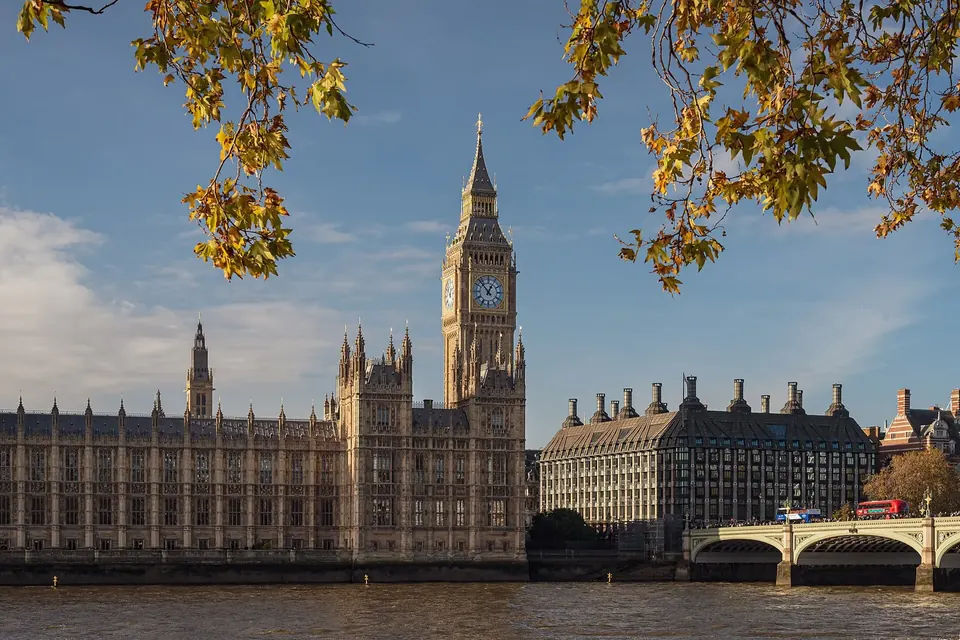
The Vow, the Smith Commission, EVEL and the SNP landslide of 2015, in order.
 Explainers
Holyrood's refusal of consent
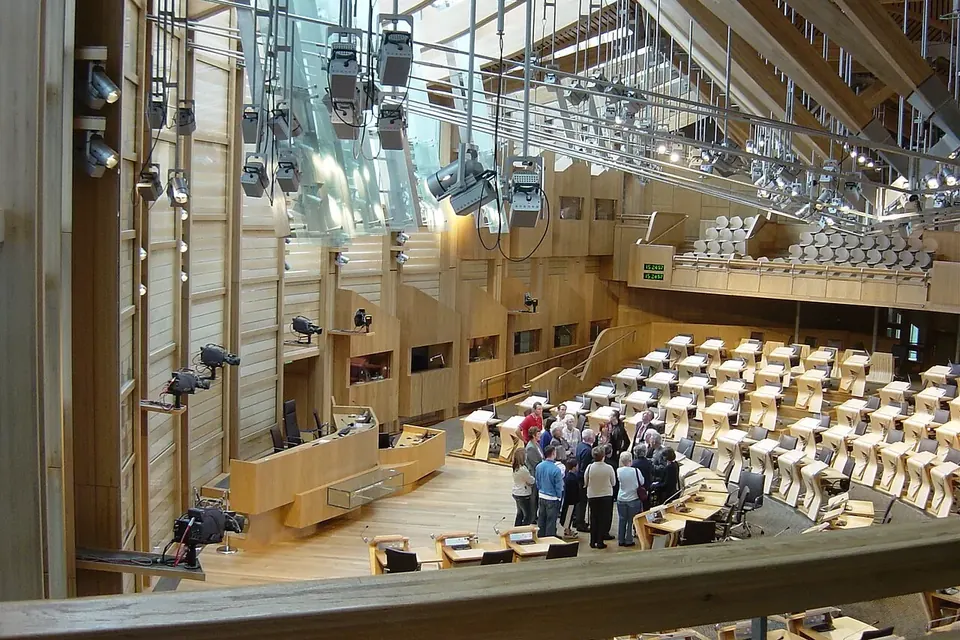
A 93–30 refusal, the Sewel convention, a walkout at PMQs and the Continuity Bill ruling.
 Events in context
Hope over Fear, 2017
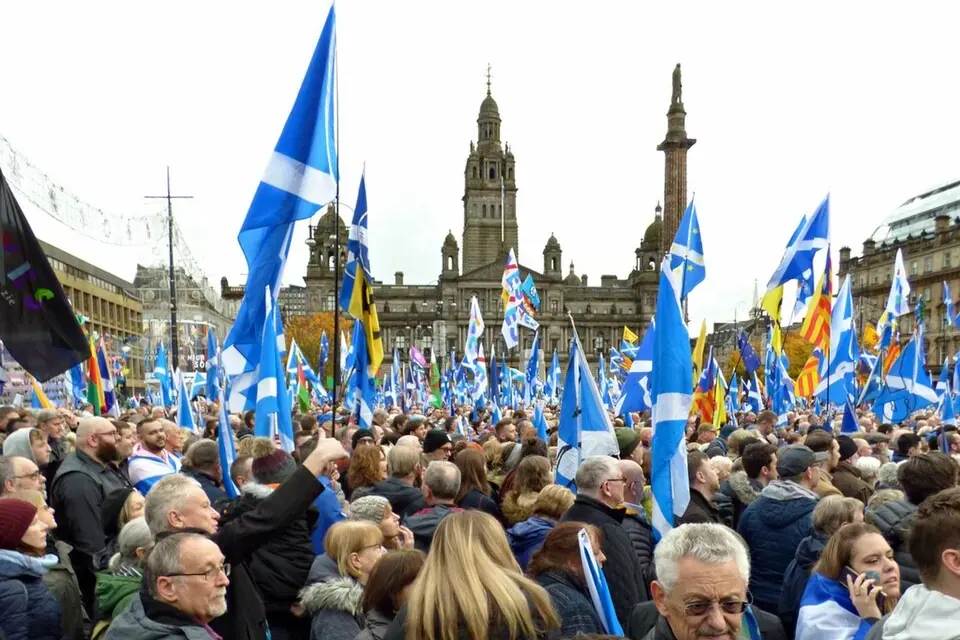
George Square, the 2014 anniversary and the 'power grab' argument over the EU Withdrawal Bill.