The road after the No vote: the Smith Commission, 'English votes for English laws' and the Scotland Act 2016
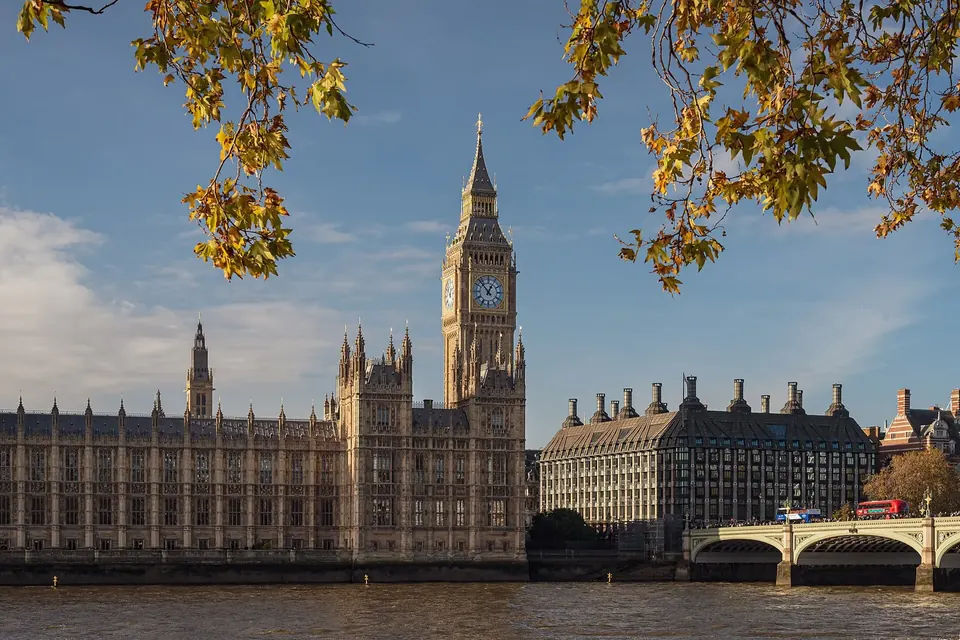
The 2014 referendum did not end the argument about Scotland's place in the United Kingdom. Within hours of the result, the debate had moved on to new powers for the Scottish Parliament, the position of England within the Union and the future of the parties that had campaigned on each side. This article sets out what happened in the months after the No vote and how it shaped the years that followed.
Timeline
- 16 September 2014: the leaders of the three main UK parties publish a joint pledge of more powers, known as "the Vow".
- 19 September 2014: result declared; David Cameron announces a commission on devolution and links it to "English votes for English laws"; Alex Salmond announces his resignation.
- 27 November 2014: the Smith Commission publishes its agreement.
- 7 May 2015: the SNP wins 56 of Scotland's 59 Westminster seats.
- 22 October 2015: the Commons adopts standing orders for "English votes for English laws".
- 23 March 2016: the Scotland Act 2016 receives Royal Assent.
The Vow
Two days before the vote, the Daily Record published on its front page a statement signed by David Cameron, Ed Miliband and Nick Clegg. It promised "extensive new powers" for the Scottish Parliament, a permanent Parliament, and the continuation of the Barnett formula. It was a response to a late tightening of the polls, including one that had put Yes narrowly ahead, and it gave No campaigners a concrete answer to voters who wanted change without independence. How much the Vow influenced the result is disputed; survey evidence suggests that most voters had made up their minds earlier. Its political importance came afterwards, as the yardstick against which every later transfer of power was measured.
The morning after: a commission and a new English question
On the morning of 19 September, the Prime Minister announced that Lord Smith of Kelvin would chair a cross-party commission on further devolution. In the same statement he said that the question of English votes on English laws required "a decisive answer". To many who had voted No in expectation of a straightforward delivery of the Vow, linking the two looked like a change of terms. To others it was a fair recognition that devolution had left England as the only part of the UK without its own legislature, the anomaly known since the 1970s as the West Lothian question.
The Smith Commission
The commission brought together two representatives from each of the five parties then in the Scottish Parliament: the SNP, Labour, the Conservatives, the Liberal Democrats and the Scottish Greens. It received thousands of submissions from organisations and members of the public and reported on 27 November 2014. The main points of the agreement were:
- power for the Scottish Parliament to set the rates and bands of income tax on earnings, with the personal allowance remaining reserved;
- the assignment to Scotland of part of the VAT raised there;
- control over certain social security benefits, including disability benefits and the power to create new benefits in devolved areas;
- powers over Air Passenger Duty, the Crown Estate in Scotland and aspects of employment support;
- a statement that the Scottish Parliament would be permanent and that the convention that Westminster does not normally legislate on devolved matters without consent would be placed in statute.
Supporters of independence argued that the package fell short of "home rule" or "devo max"; supporters of the Union described it as making Holyrood one of the most powerful devolved legislatures in the world. Both descriptions can be found in the record of the debates that followed.
The political earthquake of 2015
The months after the referendum produced a surge in membership of the parties that had backed independence. SNP membership rose from about 25,000 before the vote to more than 100,000 within months, and the Scottish Greens also grew quickly. Nicola Sturgeon succeeded Alex Salmond as First Minister in November 2014. At the general election of May 2015, the SNP won 56 of the 59 Scottish seats with half of the vote, leaving Labour, the Conservatives and the Liberal Democrats with one seat each.
English votes for English laws
In October 2015 the Conservative government, by then with a majority of its own, changed the standing orders of the House of Commons. Bills or clauses certified by the Speaker as relating only to England (or to England and Wales) required the approval of MPs from those parts of the UK before they could pass. In practice the procedure was rarely decisive, and it was abolished in July 2021. Its significance was mostly symbolic: it showed that the 2014 referendum had raised questions about the constitution of England as well as of Scotland.
The Scotland Act 2016
The Scotland Act 2016 turned most of the Smith agreement into law. It also added to the Scotland Act 1998 the statement that the UK Parliament "will not normally legislate" on devolved matters without the consent of the Scottish Parliament. A few months later, the Brexit referendum and the Supreme Court's judgment in the Miller case of January 2017 would show the limits of that wording, a story told in our article on the 2018 consent dispute.
Why the aftermath mattered
For campaigners on the losing side, the period after 18 September 2014 was one of regrouping: many small groups that had formed for the referendum either closed or continued at a lower level of activity, while others turned into lasting networks. For the UK as a whole, the aftermath fixed the main lines of the argument for the next decade: whether promises made during the campaign had been kept, whether further devolution could settle the question, and how far a referendum result could be considered final once circumstances changed. Those questions are traced in our articles on a "new union" and on the revival of the independence campaign in 2017.
Sources
- Report of the Smith Commission for further devolution of powers to the Scottish Parliament, 27 November 2014; overview and references on Wikipedia.
- Scotland Act 2016, legislation.gov.uk.
- House of Commons Library, briefings on English votes for English laws (2015–2021).
- Prime Minister's statement on the Scottish independence referendum, 19 September 2014, gov.uk.
- UK general election 2015 results, House of Commons Library.
 Arguments
The case put to England in 2014
Anti-English feeling, 'subsidy junkies', oil, the pound and pensions: the claims, and what the record shows.
 Explainers
Holyrood's refusal of consent
A 93–30 refusal, the Sewel convention, a walkout at PMQs and the Continuity Bill ruling.
 Events in context
Edinburgh between referendums
Stalls in the Meadows, hubs and alliances: grassroots campaigning in a No-voting capital.