Observing Catalonia's 1 October 2017 referendum: what happened, and what observers reported
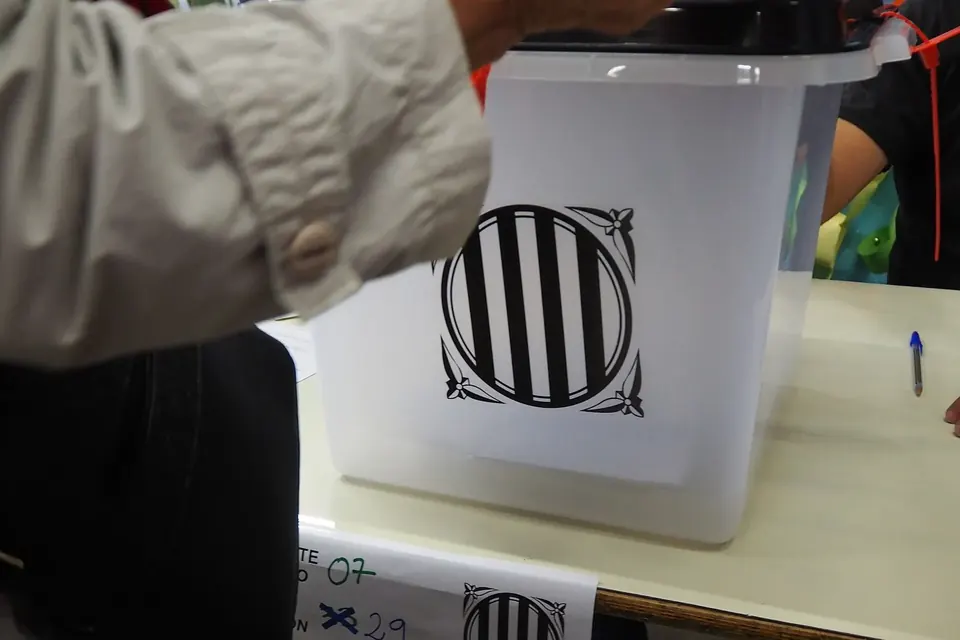
On 1 October 2017 the Catalan government held a referendum on independence that Spain's Constitutional Court had suspended and the Spanish government considered illegal. Spanish police tried to stop the vote, and images of officers using force at polling stations were seen around the world. Several groups of foreign visitors, including a small team from Scotland, travelled to Catalonia to watch the day and later published reports. This article sets out the facts and explains how such observation works.
A short fact sheet summarising this article is available as a PDF.
Timeline
- 6 September 2017: the Parliament of Catalonia passes the referendum law (Law 19/2017).
- 7 September: the Constitutional Court suspends the law.
- 20 September: Spanish Civil Guard raids on Catalan government offices; senior officials arrested.
- 1 October: the vote takes place; police intervene at many polling stations.
- 6 October: the Catalan government publishes final results.
- 27 October: the Catalan Parliament votes for independence; Spain applies Article 155 (see our article).
- 21 December: regional election called by the Spanish government.
A vote without legal recognition
Spain's 1978 Constitution states that it is based on the "indissoluble unity of the Spanish nation" and reserves the power to authorise referendums to the central state. The Catalan government argued that the right to self-determination justified the vote. The Constitutional Court suspended the referendum law the day after it passed and later annulled it. Unlike Scotland in 2014, there was no agreement between the regional and central governments, so the vote took place without an official electoral roll from the state statistics office, without an independent electoral commission (the one appointed by the Catalan Parliament resigned under threat of fines) and with the No side largely boycotting it.
Polling day
On the morning of 1 October, the Spanish National Police and Civil Guard were deployed to close polling stations and seize ballot boxes. The Catalan police, the Mossos d'Esquadra, had also been ordered to prevent the vote but largely did not use force. Many schools had been occupied by parents and neighbours since the previous evening to keep them open. To make voting possible where stations were closed, the Catalan government announced a "universal census" allowing people to vote at any station.
Police charges took place at a number of polling stations. The Catalan health service reported that 893 people had been attended to on the day, a figure later revised upwards; the Spanish interior ministry reported injuries among police officers. Human Rights Watch, which investigated several incidents, concluded on 12 October 2017 that police had used excessive force against peaceful protesters.
Results
The Catalan government announced that 2,286,217 votes had been counted, of which 2,044,038 (90.2%) were for independence, from an electorate it put at about 5.3 million, a turnout of around 43%. It also said that votes from closed stations had been lost or seized. Because of the circumstances, the figures could not be independently verified, and opponents of independence, most of whom had not voted, rejected them as meaningless.
Who observed the vote?
Election observation is normally carried out by organisations invited by the state that holds the election, such as the OSCE's Office for Democratic Institutions and Human Rights (ODIHR), following the Declaration of Principles for International Election Observation endorsed at the United Nations in 2005. Since the Spanish state did not recognise the vote, no such mission was present. Instead, the Catalan government and Catalan organisations invited "international visitors": parliamentarians, academics, election professionals and activists from several countries.
The best-known group was the International Expert Research Team, led by the New Zealand political scientist Helena Catt. Other delegations included members of European parliaments. Smaller teams also came on their own initiative, including people from Scotland with experience of working at UK polling stations and counts. These teams were not neutral in the formal sense required of an accredited mission, since many of their members sympathised with the right to vote, and their reports should be read with that in mind.
Preliminary statements and final reports
Observation missions usually publish two documents. A preliminary statement appears within a day or two of polling and records first findings. A final report follows weeks or months later, with fuller evidence and recommendations. The visiting teams in Catalonia followed the same pattern. Their preliminary statements in early October described long queues, determined voters, and polling stations where police action had stopped voting and damaged property. Their final reports, published later in the autumn, added detail on the organisation of the vote, the "universal census", and the lack of safeguards that would normally allow results to be verified.
Most reports, including those sympathetic to the Catalan cause, acknowledged that the conditions made it impossible to call the referendum a vote that met international standards. Their main contribution was as eyewitness accounts of the conduct of the police and the voters.
Aftermath
At the regional election of 21 December 2017, Ciudadanos became the largest party, but pro-independence parties kept a narrow majority of seats. Several Catalan leaders were tried before Spain's Supreme Court, and in October 2019 nine were sentenced to between nine and thirteen years in prison for sedition and, in some cases, misuse of public funds. They were pardoned in June 2021, and an amnesty law was approved in 2024. The former president, Carles Puigdemont, left Spain at the end of October 2017.
Sources
- Constitutional Court of Spain, rulings on Law 19/2017 (September and October 2017).
- Generalitat de Catalunya, final results of the referendum of 1 October 2017, published 6 October 2017.
- Human Rights Watch, "Spain: Police Used Excessive Force in Catalonia", 12 October 2017.
- Declaration of Principles for International Election Observation, United Nations, 27 October 2005.
- OSCE/ODIHR, Election Observation Handbook, 6th edition, 2010.
- Supreme Court of Spain, judgment 459/2019 of 14 October 2019.
 Explainers
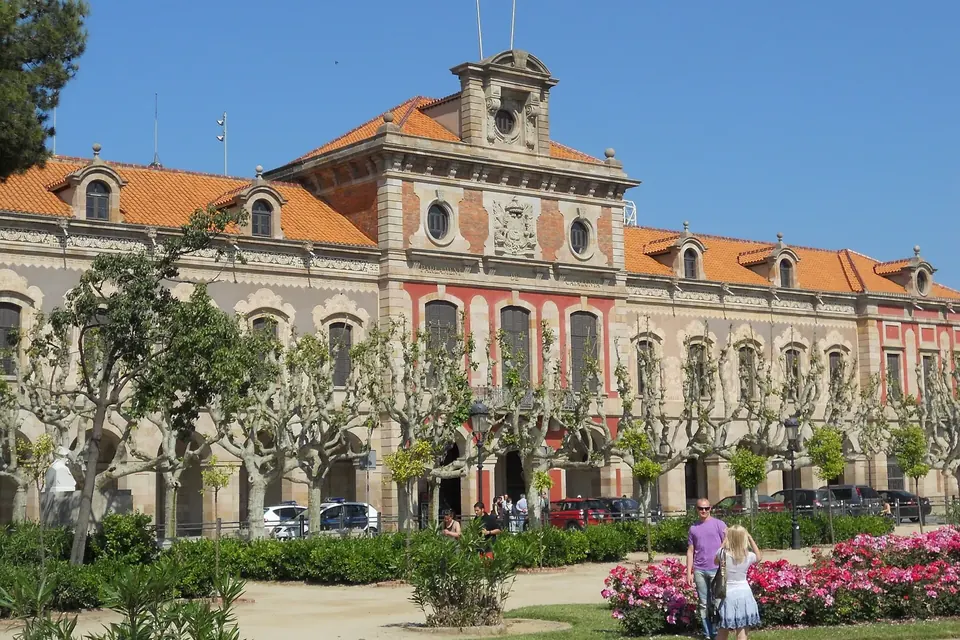
The declaration of 27 October 2017
A 70–10 vote, Article 155 the same afternoon, and a declaration no government recognised.
 Events in context
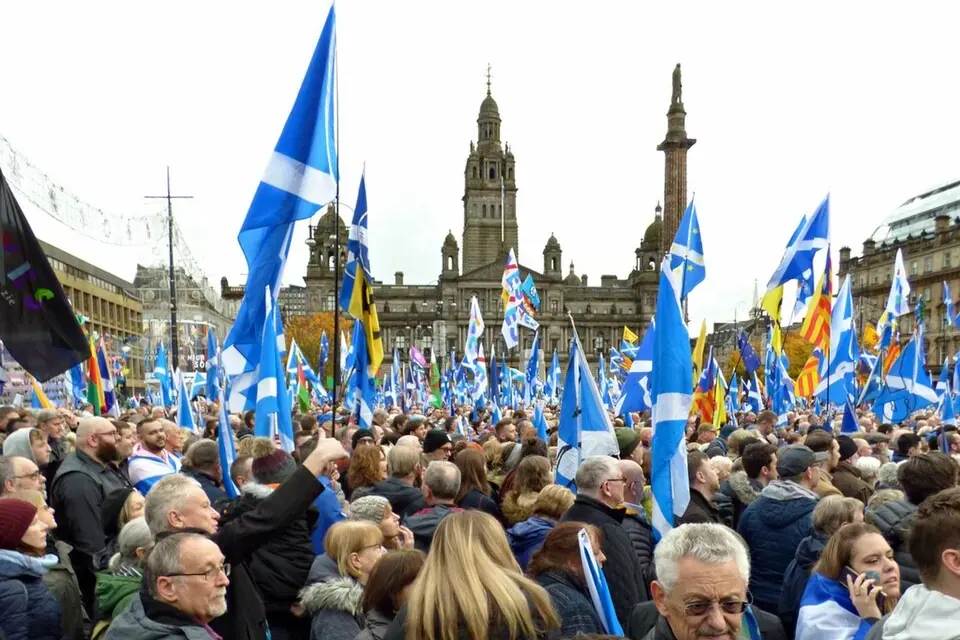
Hope over Fear, 2017
George Square, the 2014 anniversary and the 'power grab' argument over the EU Withdrawal Bill.
 Explainers
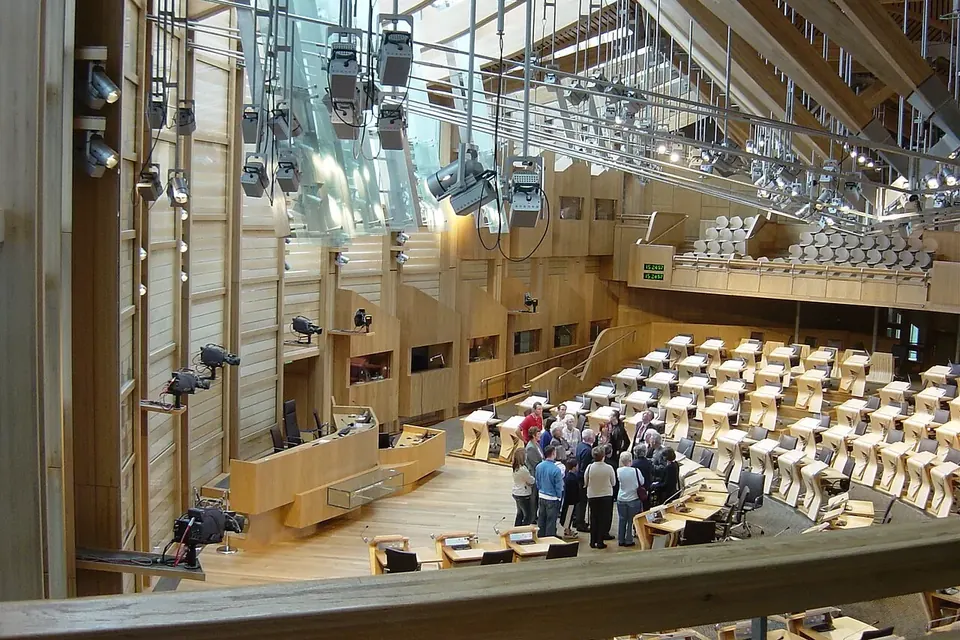
Holyrood's refusal of consent
A 93–30 refusal, the Sewel convention, a walkout at PMQs and the Continuity Bill ruling.